Elderly care
Dedicated team
Elderly Care Platform
Closing the loop between wearables, in-home sensors, emergency call buttons, community workers and family members, so that anything unusual gets a response within minutes.
A home-care platform built for the district civil affairs authority of a city in East China and its subdistricts. Community workers previously covered elderly residents living alone through phone calls and home visits; a fall or a long spell of inactivity was often only noticed by a neighbour or relative. The hard part was never the hardware but who answers the alert: mixed device brands, false alarms that erode trust, missed alarms that become liabilities, and families who want visibility without open access to health data.
6
Pilot subdistricts
8,000+
Residents under care
5 min
First-response SLA for alerts
Highlights
- A unified device layer abstracts wristbands, fall detection, door sensors, utility-usage sensors and call buttons; a new brand needs only one adapter.
- A rules engine with behavioural baselines judges on multiple signals, so no single signal raises an alert on its own; invalid alerts fell by around 60% after launch.
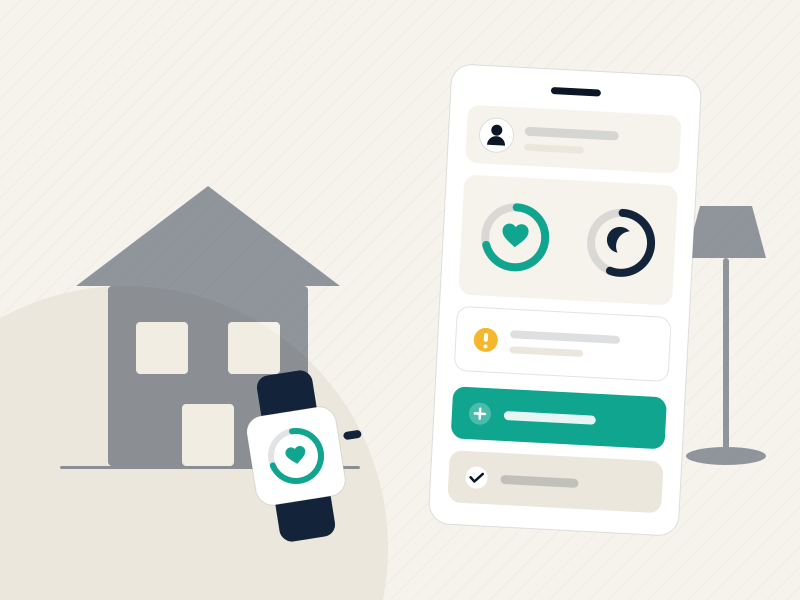
- A mobile app for community workers queues alerts by priority with one-tap calling, visit check-in, photos and case notes, all logged; overdue alerts escalate automatically to the duty officer under a measurable SLA.
- A WeChat mini-program shows families a masked health summary and care records with urgent alerts pushed in real time; service records moved online and export monthly for subsidy accounting and performance review.
Tech stack
GoMQTT / IoTKafkaTimescaleDBReactFlutterWeChat Mini Program